U.S. apartment rents slip 0.08% in September, ending nine-month streak of positive-to-flat increases
Annual rent growth accelerated to 1.5% from 1.3% in August, while Apartments.com flagged elevated supply as a continuing constraint on pricing.

The national average apartment rent slipped a dollar in September 2026, to $1,752 from an upwardly revised $1,753 in August, a 0.08% decline that CoStar Group's Apartments.com reported as the end of nine consecutive months of positive to flat monthly increases. The first negative month since the flat-to-declining stretch across the second half of 2025 and early 2026 arrives in the season when this series normally gives ground.
Year-over-year rent growth accelerated to 1.5% in September from 1.3% in August, above the 1.0% recorded a year earlier, and the August print had shown annual gains still firming even as the current month stalled. A trailing 12-month rate averages the past year, and last autumn was weaker than this one has been so far, while a single month of negative momentum speaks to a narrower question: the leases being signed right now rather than the rent roll already in place.
Fall softening is routine for this series, which declined 0.2% in September 2024 and again in September 2025, and Apartments.com described this year's pullback as considerably milder, possibly suggesting improvement in pricing conditions, even as the same report names elevated supply as a continuing constraint on pricing momentum nationally. The gap between a 0.2% autumn and a 0.08% one is larger than it looks. On the report's own figures, three months at 0.2% would take roughly $10 off today's $1,752 average, against the $26 or so of annual growth implied by a 1.5% rate — about 40% of a year's gains spent before winter leasing begins.
Regional rent growth was uniformly down in September, with the Mountain region's 0.3% decrease the most pronounced, according to Apartments.com. The report carries no metro detail this month, and the dispersion underneath the national number has been wide, with 31 of the top 50 markets cutting rents in August and San Francisco growing 11.9%. A $1,752 national average cannot show whether September's declines stayed in the same metros or widened.
A second straight dollar decline
September's dollar move is the second in a row at the national level, a rounding-scale figure that keeps landing in the same place. The September 6 note called the August print a flat month that snapped an eight-month streak; a metro cut on September 16 had the same month down a dollar nationally with a wide spread beneath. Eight monthly gains plus one flat month reconciles with the nine positive-to-flat readings Apartments.com now says September ended.
The investment side has not been waiting on a firm monthly number: L.A. County investment sales rose 28.5% in July on the strength of multifamily, and the working view is that apartment pricing is resetting on rent and basis rather than scarcity, with below-basis trades as the comps. A month of negative momentum refines that arithmetic more than it disturbs it, because the buyers who matter are underwriting a forward rent line, and the forward line turns on when the supply the report names stops arriving.
For the two sides of an apartment loan, the monthly and annual readings do different work. Annual growth is what services debt and supports per-door revenue underwriting, and it is improving; the current month is what sets the asking rent on the next lease, and it went negative. A fall that costs 0.08% a month leaves a sponsor's growth plan roughly intact through the winter, and a fall that costs 0.2% does not, which is the difference between an extension conversation that stays routine and one that does not. On maturing apartment debt, it is the annual rate, not the September print, that sets the terms.
Buyers underwriting the 2028-29 supply gap still have to absorb a split print rather than resolve it: annual growth firming to 1.5% while monthly momentum turns negative for the first time in nine months, with the report pointing at supply as the thing capping a forward rent line that lenders will grade against today's numbers.
October and November will decide how the year reads. If the national average holds near September's decline, the annual rate has room to keep improving into 2027 with supply still working through; a return to the deeper autumn pattern would put the 1.5% reading in line to be the year's high point. The Mountain region's 0.3% is the other number worth tracking — deepest of the regions this month, and the first place to look if the softer print spreads.
Save this analysis and keep the funds you follow together in My Desk.
Sign in to save articles or follow funds.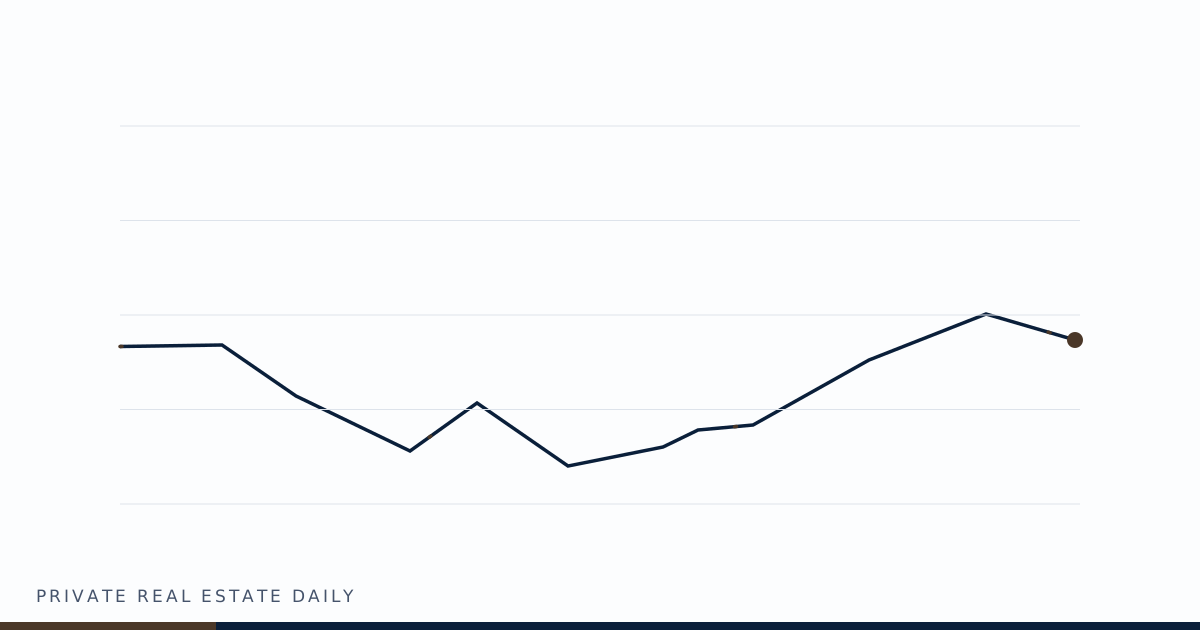 Sectors
Colovore files $430M Fort Worth data center permit a day after Texas pause
 Sectors
BKM report defines mid-bay industrial as the segment between small-bay and big-box
 Capital